Jean-Pierre Bianchi
| LinkedIn
| Skills (endorsed)
| Recommendations
| My Substack
| Email me
| My CV
Jean-Pierre Bianchi
| LinkedIn
| Skills (endorsed)
| Recommendations
| My Substack
| Email me
| My CV
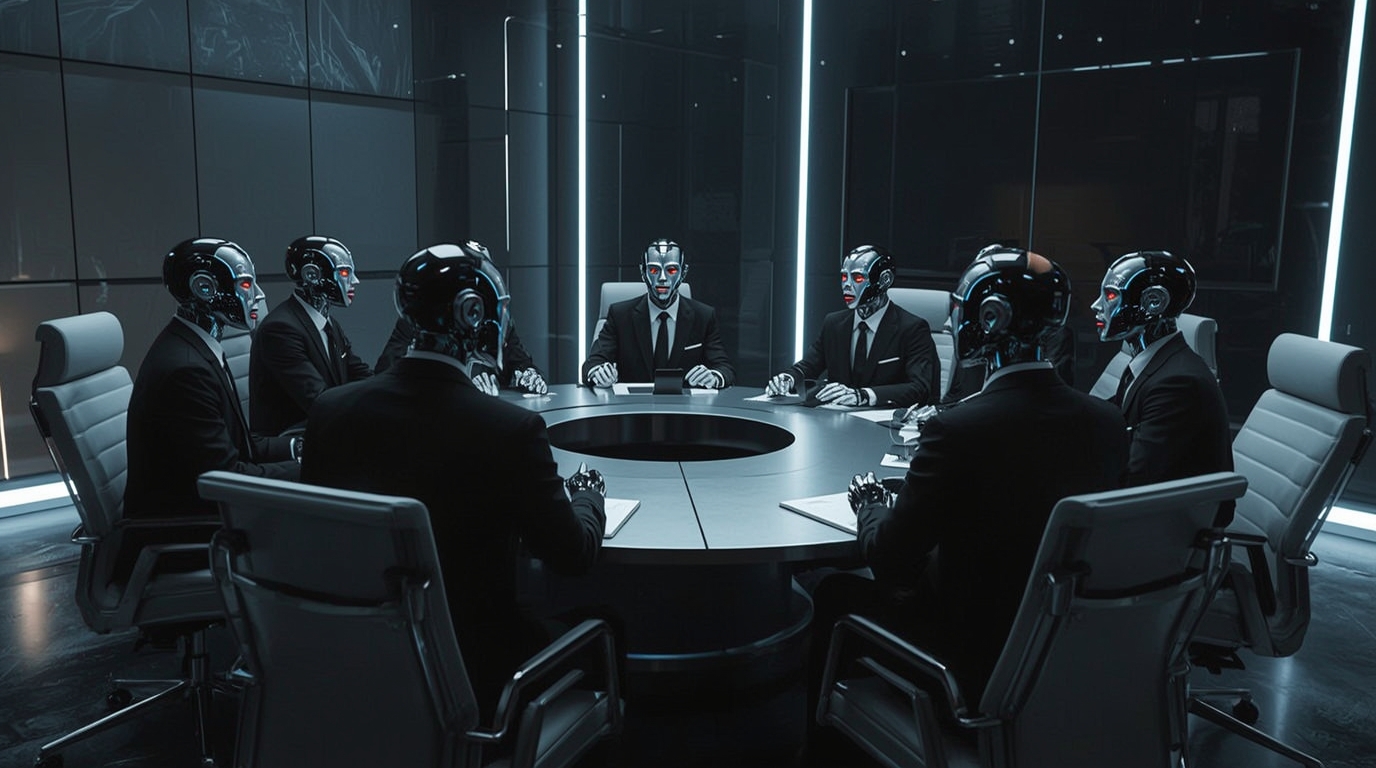 I have done a lot of research on Behaviour modeling with ML and AI.
Here’s a short presentation of the project I am working on.
I have done a lot of research on Behaviour modeling with ML and AI.
Here’s a short presentation of the project I am working on.
The gist of my model is the fact that current research either:
Generative Agents: Interactive Simulacra of Human Behavior Generative Agent Simulations of 1,000 People A foundation model to predict and capture human cognition
Simulations with such models will seem ‘realistic’ since they can produce convincing discussions between humans. But is it what would really happen in the real world? No, because, first of all, the dataset are not exhaustive, leading to inaccurate representations of real people, ie the decision makers, politicians etc
`Every man is like the Moon, with a side he never shows` Mark Twain
Does the past predict the future? Yes, if we know ALL the past. Any small detail being ignored can arise at the worst moment and change things tremendously. One wrong word may completely sway a decision, which is why all people in a simulation must be thoroughly modelled individually instead of using LLMs which represent the behaviour of a population on average. And the population in the dataset only.
There lies the problem. The second study above used a dataset created from interviews. The issue is that people only show some facets of their personality, while hiding others. In fact, we have several persona inside of us (the father, the provider, the party goer, the business man, the hurt child …) and we show the one most appropriate to a situation. In public, during an interview, people ‘act’ their own version of a ‘nice person’, except when they are challenged.
To model even one persona, one would literally have to scan all a person’s life: everything they said, and did. And that wouldn’t still be enough since one would also have to take into account the circumstances, the news, what someone said to them, or simply heard. Or read on social media.
Predictions, or simulation of a group, can only work in real-time, by taking into account everything a person hears or sees, adapt to it, which can cause profound shifts in a person’s behaviour or decisions. If we didn’t have an accurate profile of the other persons, we couldn’t predict what hw they would react to a proposal, and therefore how the conversation will go in reality. It would still not account for the influence of the news (that will happen during the meeting after the simulation is finished), but at least, very accurate simulations could be run, one for some most probable news events.
Even if we had a perfect profile of every persona inhabiting every participants, and even if our model was taking into account everything they tell each other during a simulated conversation, and knew the news in advance, it wouldn’t be enough because of strategies, aka manipulative tactics, people resort to to reach their (secret) ojbectives. This objective is part of ‘dark side of the Moon’ people never show, or show when it’s too late for their opponents to do anything.
The behavioral model uses an objective function, which is surprisingly, universal, i.e. it applies to every person in every situation. It has been tested and confirmed after years of behavioral analysis of all sorts of people, in all situations. Including the ‘edge cases’: irrationality, contradictions, cognitive dissonance, high emotionality for instance.
This objective function allows to ‘steer’ every persona in a debate to adapt in real-time to what other participants say or do, to world events etc. It solves the 3 problems at once: it is trained on every person individually, it works in real time, and behavioral strategies simply emerge from it.
To illustrate how the objective function works, we can compare it to a feedback signal. Feedback allows rockets to ‘stay on target’, which otherwise would miss it by a mile, by constantly re-adjusting its course based on its real location. If we compare a debate, a discussion to a trajectory (of words, ideas), the objective function allows each individual’s simulation to ‘stay on target’ at every step, to follow the same trajectory of words, as it would have been the case in a real situation. Without it, the trajectory would veer off quite quickly and the final result would be totally different from the real conversation, and therefore useless.
There isn’t a demo yet since I am building the first version (PoC).